Polarization — Public Debate Installation
← Home

Polarization

University Project
Polarization

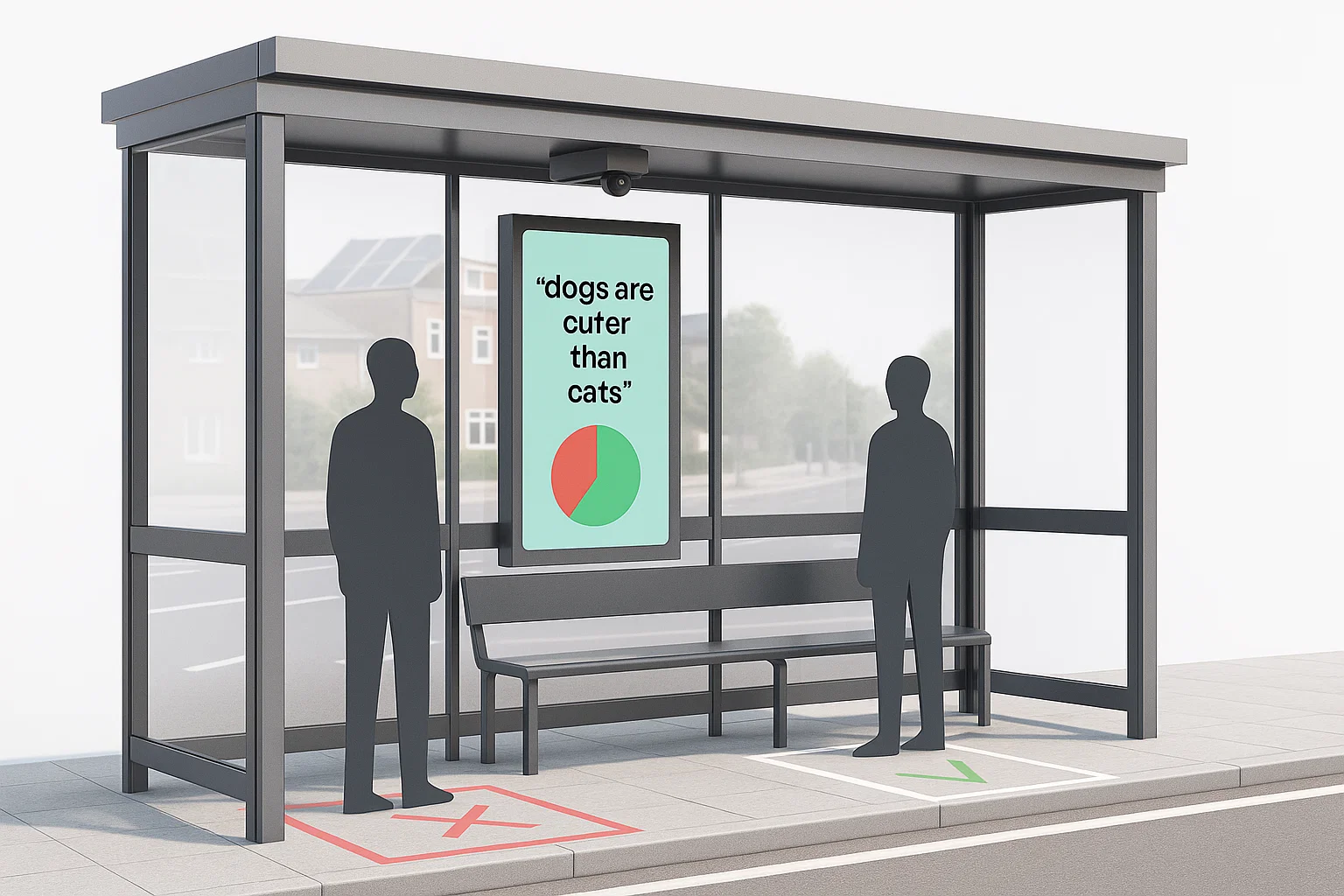
During my studies, I took part in an international design week where my team and I had just four days to develop and implement an idea addressing social polarization. We created an interactive concept that invites people to engage in playful, light-hearted debates on everyday topics like “Cats are cuter than dogs” or “Cereal is a soup.”

By bringing small debates into public spaces like bus stops, we aimed to reduce social polarization through humor, participation, and curiosity - showing that even small conversations can bridge big divides.
Polarization concept visualization

Discovery
Brainstorming

We brainstormed as a team on how to tackle the topic of polarization. The idea evolved naturally — a simple, friendly debate on a public statement that anyone could agree or disagree with.

We explored where such debates could take place — bus stops, buses, or train stations. Eventually, we focused on digital bus stop screens as they offered visibility and engagement during idle waiting time.

Define
Concept Prototype

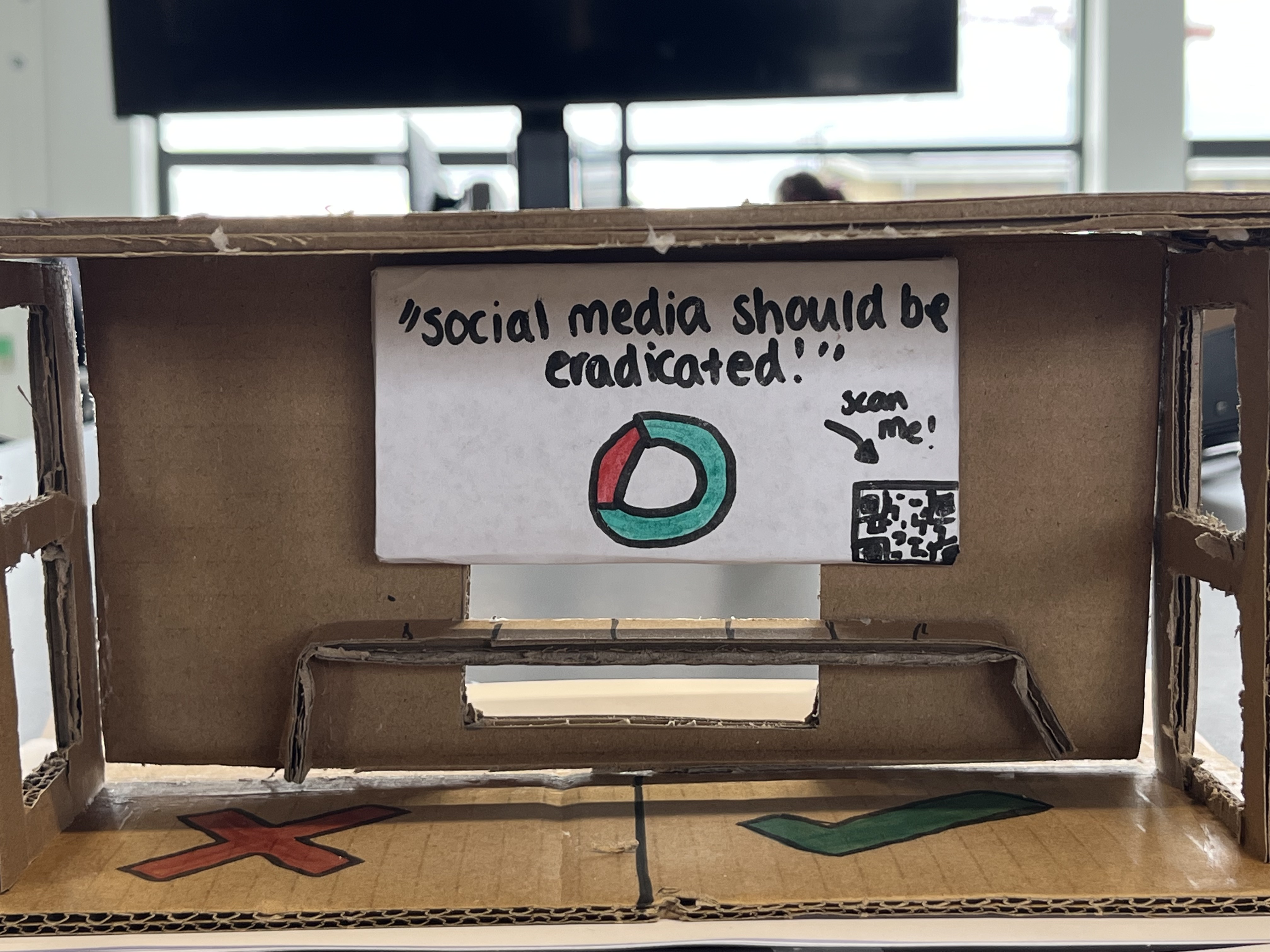
Our prototype evolved from buttons on the screen to two colored areas on the ground — one for “Agree” and one for “Disagree.” As participants move to a side, live statistics update on the display, showing real-time public opinion.

This approach reduced hesitation and made participation natural and visible, encouraging conversations among strangers.

Prototype design concept Ground debate zones visualization

Develop
User Testing

We tested the concept in TQ 4.2 building with five debate statements and a simple voting setup.

We put 5 different debate topics across the building: "Egg came before the chicken", "Fat bikes should be banned", "Video games are a waste of time", "You should date to marry", "Tik tok should be banned". Within minutes, people started engaging, discussing, and voting, validating that simple topics can initiate real conversations.

Phase 4
Website Prototype

We visualized a web-based prototype, showing how the system would look online. The website would have daily statements and agree/disagree button with live statistics.